Steady Social Confidence: Calm Tools for Any Situation
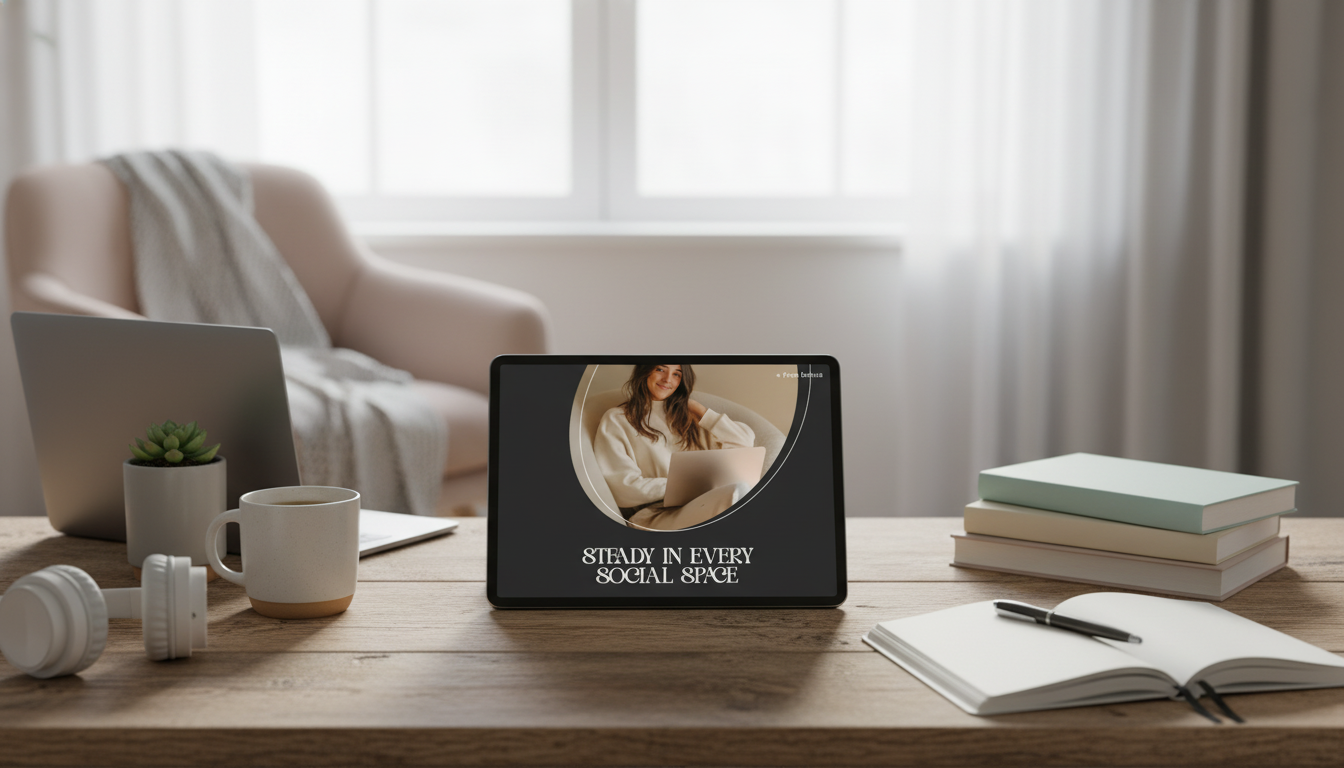
Steady in Every Social Space: A Practical eBook for Calmer Conversations and Real Confidence
Social anxiety can make everyday moments—introductions, small talk, meetings, dates, even quick errands—feel tense and unpredictable. The good news is that “confidence” doesn’t have to mean feeling fearless. It can mean feeling steady: noticing the nerves, staying present anyway, and having a few reliable tools that work in real time. Steady in Every Social Space digital download is built around that practical idea—reduce the spiral of worry, strengthen social skills, and build calm one manageable step at a time.
When Social Situations Feel Overwhelming
Social anxiety often shows up as a mix of body sensations, mental noise, and avoidance patterns. Common signs include racing thoughts, a tight chest, blushing, a shaky voice, overanalyzing what to say, turning down invitations, or rehearsing conversations for hours. Many people also feel “fine” at home but get activated in groups, around authority figures, on dates, in unfamiliar settings, or when attention lands on them unexpectedly.
One reason it can feel so sticky is the anxiety loop:
- Trigger (walking into a room, joining a meeting, being introduced)
- Fear of judgment (mind-reading, “They’ll think I’m awkward”)
- Body stress response (faster heart rate, shallow breathing, tension)
- Safety behaviors (staying quiet, over-explaining, escaping early)
- Short-term relief (the moment ends)
- Stronger anxiety next time (the brain learns “avoidance = safety”)
A steadier approach focuses on skill-building, nervous-system regulation, and gradual exposure—rather than forcing “perfect” social performance on demand.
Quick Tools for Different Social Moments
| Situation | What Anxiety Often Says | Steady Response to Practice | Time Needed |
|---|---|---|---|
| Walking into a room | Everyone is watching | Ground in 3 sensory details + slow exhale longer than inhale | 30–60 seconds |
| Small talk starts | I’ll sound awkward | Use a simple opener + ask a follow-up question | 1–2 minutes |
| Mind goes blank | I’m failing | Name the moment: “Give me a second” + return to a safe topic | 10–20 seconds |
| Speaking in a group | I’ll be judged | Share one short point early + pause; aim for clarity, not perfection | Under 1 minute |
| Afterwards replaying | I embarrassed myself | Write a balanced recap: facts vs. assumptions + one lesson for next time | 3–5 minutes |
What “Steady” Confidence Looks Like (and What It Doesn’t)
Steady confidence isn’t a personality transplant, and it isn’t “never feeling nervous.” It’s the ability to stay connected to the moment even when your body is activated. That shift usually includes:
- Less mind-reading and fortune-telling, more reality-checking (responding to what’s actually happening).
- Replacing avoidance with small experiments that are repeatable and safe.
- Building self-trust: “Even if this is awkward, it’s manageable.”
Over time, the goal becomes steadiness first and ease second. The brain learns, through repetition, that social discomfort is tolerable—and temporary.
What’s Included in the Steady in Every Social Space eBook (Digital Download)
Steady in Every Social Space – eBook Guide on how to deal with social anxiety, Build Social Confidence & Stay Calm in Any Situation | Digital Download offers a structured path that connects the dots between triggers, thoughts, and body responses—then turns that understanding into practice you can do in minutes.
- A clear framework for noticing triggers and predicting anxiety patterns before they escalate.
- Practical exercises to reduce fear of judgment and rebuild confidence step by step.
- Tools to stay calm mid-conversation: breathing, grounding, and attention-shifting strategies.
- Prompts to replace harsh self-talk with realistic, stabilizing inner dialogue.
- A gradual exposure plan so progress is measurable without feeling overwhelming.
For background on social anxiety and how it commonly presents, these references can be helpful: National Institute of Mental Health: Social Anxiety Disorder and American Psychological Association: Anxiety.
A Simple Weekly Practice Plan to Build Social Confidence
Consistency beats intensity. A workable weekly rhythm keeps you moving without pushing so hard that you snap back into avoidance.
- Choose one “small stretch” per week: ask a cashier one extra question, speak once in a meeting, attend a gathering for 20 minutes and leave on purpose.
- Track anxiety before/during/after (0–10) to spot improvement over time (memory often exaggerates how “bad” it was).
- Reduce safety behaviors gradually: cut back on over-rehearsing, practice comfortable eye contact, resist excessive apologizing.
- Debrief with two questions: “What did I do well?” and “What will I try next time?”
- Reward consistency, not outcomes: confidence grows from repetition, not from one perfect interaction.
Staying Calm in the Moment: A “Reset” You Can Use Anywhere
When anxiety hits mid-conversation, aim for a reset that’s subtle and repeatable.
Who This Guide Tends to Help Most
Digital Download Details and Getting Started Smoothly
If feeling put-together helps you show up with less friction, pairing a confidence plan with a reliable “go-to” outfit can reduce decision fatigue before you head out. Options in stock include Guess Women’s Black Knitwear and Armani Exchange Men’s Wool Blend Round Neck Knitwear.
Product Snapshot
FAQ
Can social anxiety improve without changing personality?
Yes. Progress usually comes from learning skills, regulating the nervous system, and practicing tolerating discomfort—so you can become steadier without becoming a different person. Many people gain confidence while staying naturally introverted.
How long does it take to feel more confident in social situations?
Many people notice meaningful changes within a few weeks of consistent practice, especially with small weekly “stretches” and simple tracking. Deeper shifts typically take longer, but gradual exposure and repetition speed up the process.
Is this eBook a replacement for therapy?
No. It’s an educational self-help guide that can complement therapy, coaching, or other supports. If anxiety is severe, disabling, or paired with panic or depression, professional care is strongly recommended.












Leave a comment