Puppy First-Day Feeding Checklist: 24-Hour Plan
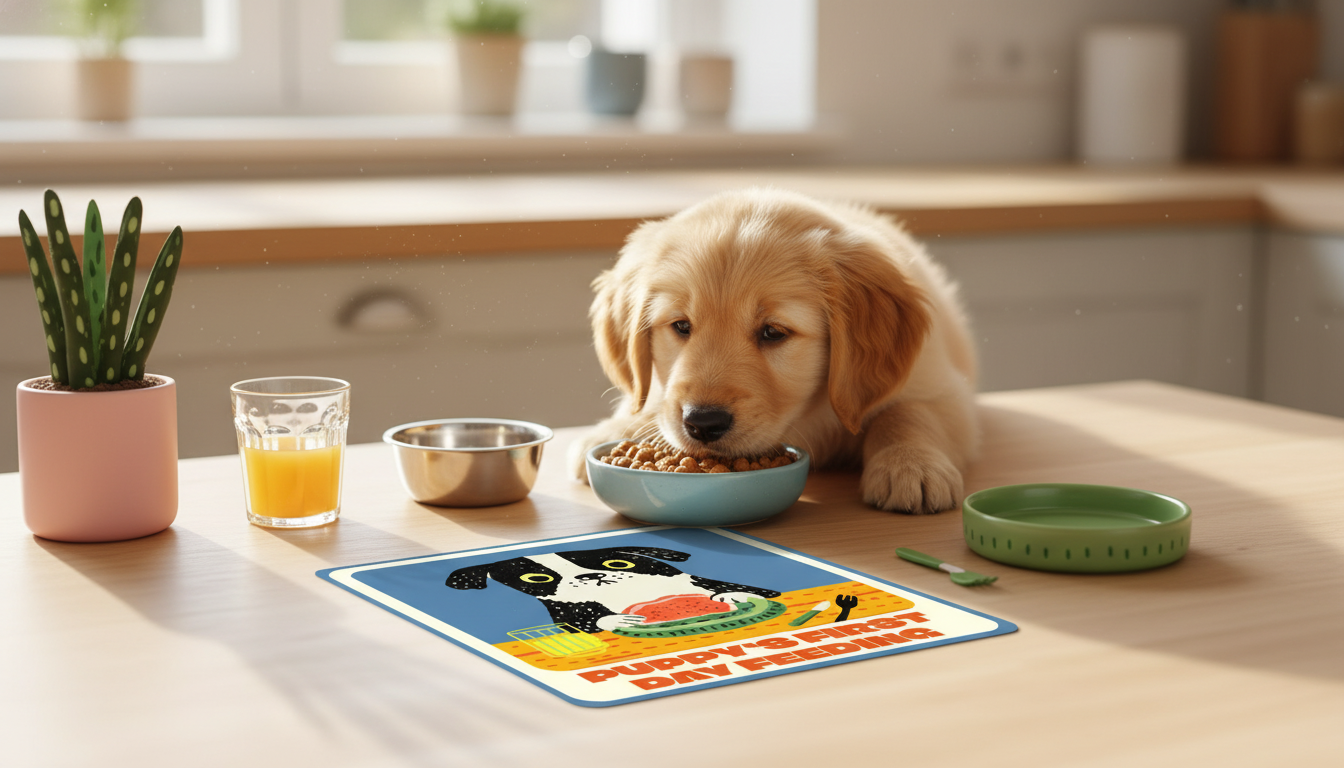
Puppy’s First Day Feeding Checklist: A Calm, Step-by-Step Plan for New Dog Owners
A puppy’s first day at home can be exciting and stressful at the same time. A simple feeding plan helps prevent tummy upset, supports hydration, and creates a routine that makes house training and sleep easier. Use the checklist below to set up the right supplies, choose the first meals, and track what your puppy eats and drinks during those first 24 hours.
Before the Puppy Arrives: Set Up a Low-Stress Feeding Station
Small choices in setup can make a big difference in whether a puppy settles enough to eat.
- Choose a quiet corner away from foot traffic, other pets, and the doorbell to reduce startle-and-skip-meal behavior.
- Use a stable bowl set: one for water, one for food; wash with hot soapy water before first use.
- Pick a puppy-appropriate food (ideally the same brand/formula the breeder or shelter used) to avoid sudden diet changes on day one.
- Have a measuring cup or kitchen scale ready so portions stay consistent.
- Set up a “calm zone” nearby (crate or playpen) so eating can be followed by a quiet rest period.
- Skip new treats and rich chews on day one; keep the first 24 hours simple.
If you’re building confidence with routines, reputable overviews like American Kennel Club: Puppy Feeding Fundamentals can help you sanity-check meal frequency and expectations.
First-Day Feeding Timeline (First 24 Hours at Home)
- Offer a small meal within 1–2 hours of arriving home, after a potty break and a few minutes of decompression.
- Keep meals smaller than “celebration portions”; stress can reduce appetite and increase the chance of loose stool.
- Plan 3–4 meals for young puppies (per veterinary guidance and food label directions) and keep the schedule steady.
- If the puppy refuses food at first, remove the bowl after 15–20 minutes and try again at the next scheduled meal; avoid constant grazing on day one.
- Encourage water intake by keeping fresh water available; consider bringing the same water the puppy drank before (or using filtered water) if the puppy is picky.
- End the last meal early enough to support overnight potty routines (timing varies by age and bedtime).
Sample first-day schedule (adjust to your puppy’s age and routine)
| Time window | What to do | Notes to track |
|---|---|---|
| Arrival + 0–60 min | Potty break, offer water, brief calm exploration | Water sips, stress signs, potty output |
| Arrival + 1–2 hours | Meal 1 (small portion), then quiet rest | How much eaten, stool/urgency, vomiting (if any) |
| Midday | Meal 2, short play, potty | Energy level, appetite, any gas or loose stool |
| Late afternoon/early evening | Meal 3, calm chew (plain), potty | Portion response, water intake, routine cues |
| Early night (if needed by age) | Optional Meal 4 for very young puppies | Overnight potty frequency, restlessness |
How Much to Feed on Day One (Without Overdoing It)
- Start with the food label’s daily recommendation for the puppy’s current weight and age, then split into the day’s number of meals.
- If the puppy is anxious, begin with slightly smaller meals and build toward the full daily amount over the next 2–3 days.
- Measure every meal to avoid accidental overfeeding (a common cause of diarrhea during the first week).
- Avoid switching to a new food on day one; if a change is necessary, transition gradually over 7–10 days unless a veterinarian advises otherwise.
- If using wet food or rehydrated kibble, keep it fresh and discard leftovers after 20–30 minutes to reduce bacterial growth.
For a deeper explanation of feeding growing dogs by life stage, VCA Animal Hospitals: Feeding Puppies is a helpful reference.
What to Offer (and What to Avoid) During the First 24 Hours
- Best choice: the same kibble or wet food the puppy has been eating, served at room temperature.
- Water: provide free access; refresh often and clean bowls daily.
- Treats: limit or skip; if needed for training, use tiny pieces of the puppy’s regular kibble.
- Avoid: table scraps, high-fat treats, rawhide for very young puppies, bones, and anything with xylitol (toxic).
- Avoid “too many new things at once”: new food + new treats + new chews often leads to digestive upset.
If you’re reviewing household risks while settling in, ASPCA Animal Poison Control: Xylitol is worth bookmarking.
Printable Checklist: What to Track on the First Day
First-day feeding & potty log (copy/print)
| Time | Food offered (type/amount) | Ate? (Y/N & how much) | Water | Potty result | Notes |
|---|---|---|---|---|---|
Troubleshooting Common First-Day Feeding Issues
Digital Download Guide: Ready-to-Print First-Day Feeding Checklist
Puppy’s First Day Feeding Checklist (printable digital download)
More In-Stock Picks (Optional Add-Ons for Organization)
- Calvin Klein Jeans Women’s Black and Pink Printed Shoulder Bag (handy for carrying paperwork, poop bags, and a measured snack cup on vet or pickup day)
- Guess Women’s Black Knitwear (a cozy layer for late-night potty trips during the first week)
FAQ
Should a puppy eat on the first day at home?
Yes. Offer small, familiar meals on a schedule, and prioritize a calm environment and steady water access. Some puppies eat less due to stress; contact a veterinarian if your puppy refuses multiple meals or seems unwell.
How often should a puppy be fed on the first day?
Most young puppies do best with 3–4 small meals spaced through the day. Follow the food label for total daily amount and confirm meal frequency with your veterinarian based on age and size.
What if my puppy has diarrhea after the first meal?
Stop treats, double-check that portions are measured, keep the same food, and monitor hydration and energy. Call a veterinarian if diarrhea is severe, contains blood, comes with vomiting/lethargy, or continues.







Leave a comment